What is Carpal Tunnel Syndrome?
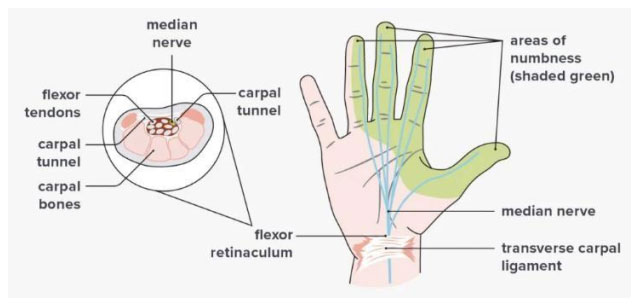
Carpal Tunnel Syndrome happens when the median nerve (a nerve that runs from the forearm into the hand) gets compressed at the wrist. This nerve passes through a narrow space called the Carpal Tunnel. When that space becomes crowded or swollen, the nerve gets compressed causing pain, numbness or weakness in the hand.
Causes
- Repetitive hand movements (typing ,machine work )
- Wrist injury or fracture
- Swelling during pregnancy
- Diabetes ,thyroid problems , arthritis
- Long –term use of vibrating tools
Common Symptoms
- Numbers or tingling in thumb , index , middle and part of the ring fingers
- Hand pain ,especially at night
- Burning or difficulty holding objects
- Burning or electric shock –like sensation in fingers
- Hand feels clumsy or stiff
Who is at Risk?
- Office workers , tailors, factory workers
- People using mobile phones or computer for long hours
- Diabetic patients
- Pregnant women
- Middle – aged and older adults
Diagnosis
- Clinical examination- Hand strength and sensation , Tinel’s sign , Phalen’s test
- Nerve condition studies (N C V )
- Ultrasound or MRI scans if required
Treatment options Non – surgical Treatment
- Wrist splint ( especially at night )
- Pain – relief medicines
- Avoid repetitive wrist movements
Surgical Treatments
- Carpal tunnel release surgery may be recommended if symptoms are severe or persistent
- Surgery relieves pressure on the nerve
Self – Care Tips
- Take breaks during repetitive work
- Keep wrist in a neutral position
- Avoid bending wrist for long periods
- Do gentle hand and wrist stretching exercises
- Use ergonomic tools , maintain good posture
When to See a Doctor
- Symptoms last more than a few weeks
- Increasing weakness or numbness
- Dropping objects frequently
- Pain not relieved by rest or medicines
Conclusion
- Early treatment gives excellent recovery and can prevent permanent nerve damage. With appropriate management- ranging from lifestyle changes and splinting to surgery – most people experience significant relief and are able to return to normal daily activities.
Dr. Nitu Joy
MBBS, M.S ( General Surgery ), MCh ( Plastic and Reconstructive surgery)
Consultant – Plastic and Reconstructive Surgeon