Imagine you have a small wound. You think it’s nothing serious… But within hours, the skin becomes swollen, extremely painful, and starts changing color. What if I tell you that this could be a life-threatening infection called Gas Gangrene?
What is Gas Gangrene?
Gas gangrene is a severe infection in which certain bacteria rapidly destroy muscles and tissues. These bacteria can produce gas inside the tissues—that’s where the name “gas gangrene” comes from. And the scary part is it can progress extremely quickly.
What should you look out for?
Warning signs can include:
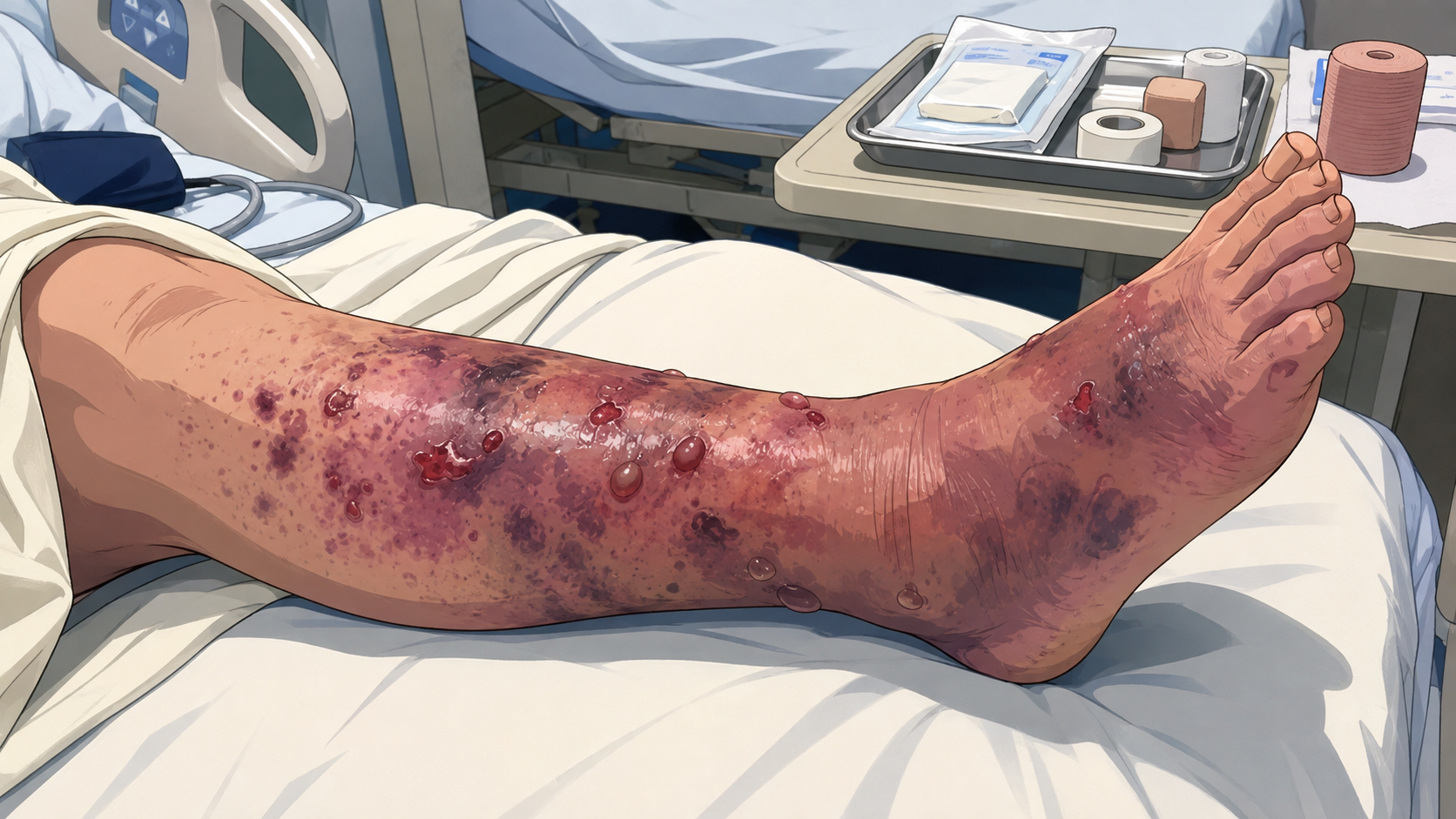
- Severe pain, sometimes much worse than the wound looks
- Rapidly increasing swelling
- Skin becoming pale, reddish, purple, or black
- Blisters or foul-smelling discharge
- Fever and weakness
- A crackling or ‘bubble-wrap’ feeling under the skin due to gas
But remember, you should never wait for all these symptoms to appear.
Who is at risk?
- It can occur after contaminated or deep wounds, especially when there is damaged or dead tissue.
- People with conditions such as diabetes, poor blood circulation, or a weakened immune system may also be at higher risk.
Why is it an emergency?
Gas gangrene can spread rapidly from the local tissue to the whole body and can lead to sepsis, shock, organ failure, and death. That’s why this is NOT an infection to treat at home.
What happens in the emergency department?
Treatment needs to start immediately.
The patient may need:
- Urgent assessment and investigations
- Powerful intravenous antibiotics
- Emergency surgery to remove dead and infected tissue
- Intensive supportive treatment if there is sepsis or shock
Sometimes, despite aggressive treatment, removal of the affected limb may be necessary to save the patient’s life.
Take-home message
So remember: A wound that is becoming rapidly more painful, swollen, discolored, or associated with fever or severe weakness needs urgent medical attention. Don’t wait for the wound to turn black. In gas gangrene, every minute matters. If you suspect a serious wound infection, go to an emergency department immediately.
Dr. Anjum Akbar Mujawar
MBBS, MEM, FEM, PEM, CCEBDM
Consultant – Emergency Medicine