How Visitors to Patients in Hospitals Endanger Patient Safety and Lives
Reading time:4min
I am writing this not as a Medical Director and Critical Care Physician who has spent most of my working life looking after very sick, often elderly patients. I also spend a significant part of my time dealing with the consequences of too many visitors in hospital wards and ICUs. This request comes from lived clinical experience.
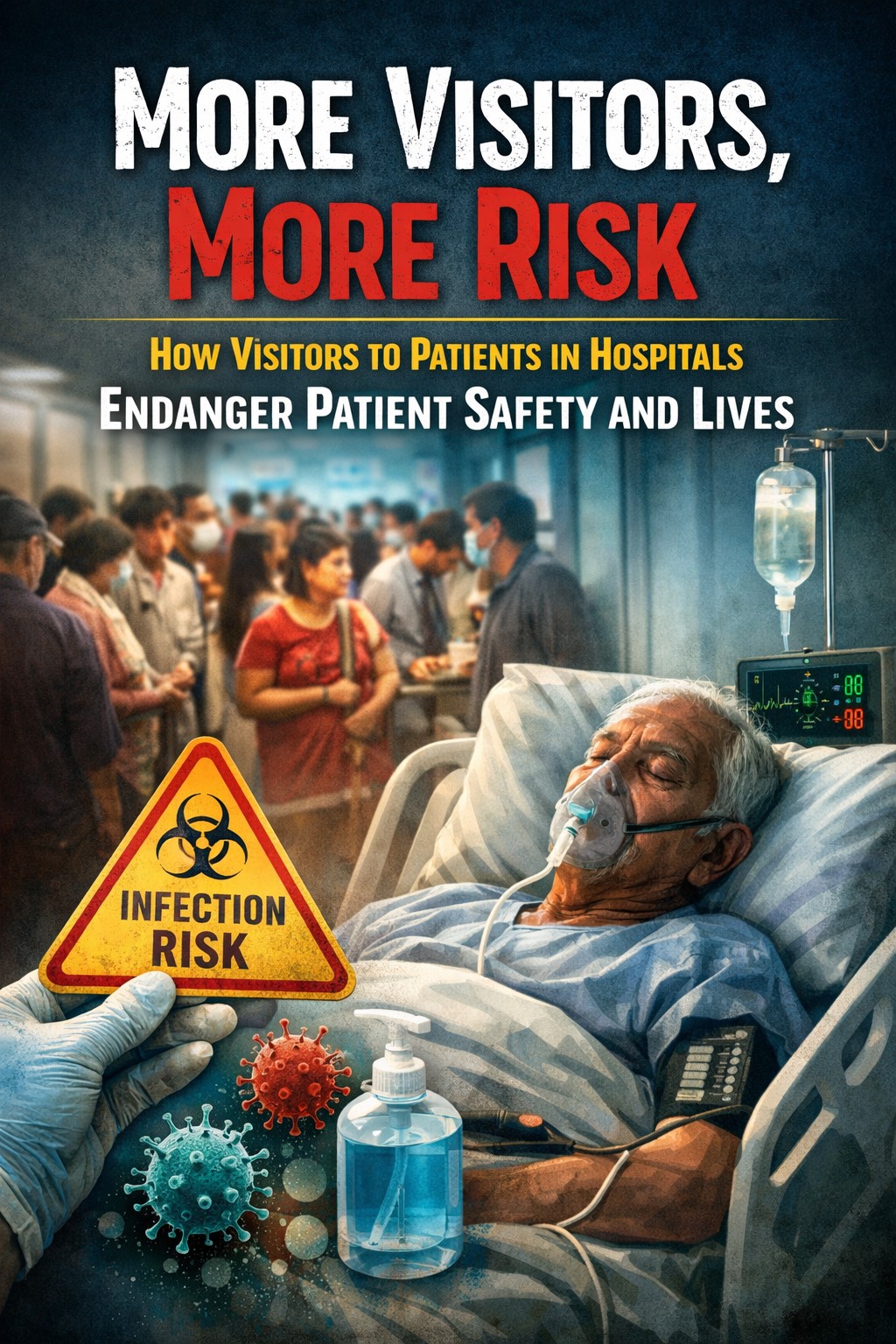
When someone we love is admitted to hospital, the natural instinct is to go and see them. In India especially, this instinct is amplified – family, friends, neighbours, and well-wishers all want to visit. The intention is kindness. The reality, however, is often harm.
Hospitals are not safe, neutral spaces. Hospitals are where the sickest people gather, where germs circulate constantly, and where patients have weakened ability to fight infections. An elderly person, someone recovering from surgery, a cancer patient, or a critically ill patient in the ICU does not respond to infections the way a healthy visitor does. What feels like a “minor cold” to us can become pneumonia, sepsis, or even death for them
Every visitor brings microbes from outside – on their hands, clothes, phones, and breath. We carry infections without feeling sick at all. Our simple touch to the bed, the railing, the patient’s hand, or their face can transfer germs. Even doctors and nurses, despite training, struggle to maintain perfect hand hygiene at all times. We as visitors, understandably, are not trained and are emotionally distracted. This makes spread of infection far more likely.
We often see elderly patients who were stable suddenly deteriorate after developing an infections that may have come from outside the hospital. We have seen recoveries delayed by days or weeks and even death. Families are often shocked when a “small infection” becomes “life-threatening”. These outcomes are devastating because they are preventable.
In the ICU, the risks are even higher. Patients in the ICU are often on breathing machines, have invasive lines, and on strong medications. Their immunity is low. Their bodies are fighting just to survive. Extra people in the ICU increase noise, stress, and infection risk. They interfere with care, delay emergencies, and exhaust patients who desperately need rest. They also doctors and nurses who desperately need the time to deliver the care rather than spend time explaining the patients’ condition multitude of times to newer members of the family and visitors.
Rest is not a luxury for a patient – it is treatment. Sleep helps the brain heal, wounds close, immunity recover, and the heart stabilize. Constant visitors disturb sleep, force patients to talk when they are exhausted, and increase stress. Many patients feel pressured to appear “okay” in front of visitors even when they are not. This stress slows recovery and, in fragile patients, can worsen outcomes.
There is also a reality that families may not see: overcrowding makes hospitals unsafe for everyone. It increases errors, delays care, and puts healthcare workers in difficult positions where they have to choose between politeness and patient safety.
I would like to share a very important message: not visiting a patient can be an act of care. Staying away does not mean you don’t love them. It means you are protecting them.
Today, we have better alternatives than ever before. Video calls allow patients to see familiar faces without physical risk. Short, scheduled calls are often more comforting than long, exhausting visits. One designated family member can receive updates from the medical team and share them with others, avoiding repeated visits driven by anxiety or lack of information. Messages, voice notes, and prayers shared from home can provide emotional support without exposing the patient to danger.
If you truly want to help a loved one recover, the best thing you can do is simple: stay away unless absolutely necessary, avoid visiting if you have even mild symptoms, respect hospital visiting rules, and trust that rest and protection are as important as medicines.
As a doctor who has watched patients struggle – and sometimes fail to recover because of avoidable complications, I ask you to rethink what care really means in a hospital setting. Your absence may be the reason your loved one heals faster.
Dr. Somnath Chatterjee
Medical Director
Prakriya Hospitals
Bangalore