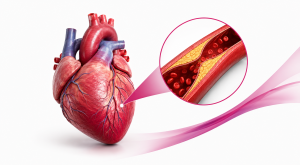
In Emergency Medicine, not all critical illnesses present dramatically. Some of the most serious conditions begin with non-specific symptoms low-grade fever, mild abdominal discomfort, or generalized weakness often with stable vital signs and no immediate red flags.
At Prakriya Hospital Emergency Department, such presentations are evaluated with a high index of suspicion, recognizing that seemingly benign symptoms may occasionally indicate a lifethreatening underlying condition.
The Illusion of a Common Presentation
Fever with abdominal pain is a frequent emergency presentation. In most cases, the etiology is benign gastroenteritis, urinary tract infection, or minor inflammatory conditions.
However, in a subset of patients, these symptoms may represent early manifestations of systemic disease.
Infective endocarditis is one such condition often subtle initially, but associated with significant morbidity and mortality if missed.
Case Presentation
A 62-year old male with diabetes mellitus presented with:
* Fever for 5 days
* Right lower abdominal pain
* Nausea and generalized weakness
Initial evaluation revealed no alarming clinical findings.
Investigations showed:
* Mildly elevated inflammatory markers
* CT abdomen: no significant abnormality
* Ultrasound abdomen: unremarkable
An intra abdominal cause was initially suspected.
As part of evaluation for undifferentiated fever, blood cultures were obtained, which later grew Staphylococcus aureus.
The patient was started on appropriate intravenous antibiotics and showed clinical improvement.
However, before completion of recommended evaluation (repeat blood cultures and echocardiography), the patient opted for discharge against medical advice (LAMA).
Clinical Turning Point
Within one week, the patient re-presented with:
* Altered sensorium
* Severe generalized weakness
* Acute breathlessness
Further evaluation revealed:
* Multiple embolic infarcts (brain, spleen, kidneys)
* Echocardiographic evidence of aortic valve vegetations
* Features of acute heart failure
Final diagnosis:
Infective endocarditis with systemic embolization secondary to Staphylococcus aureus bacteremia
Understanding the Clinical Course
This case highlights the aggressive nature of Staphylococcus aureus bacteremia.
Key characteristics include:
* Rapid progression to infective endocarditis
* Early embolic complications
* Initially non specific presentation
* Transient clinical improvement despite ongoing pathology
Importantly, clinical improvement does not exclude evolving invasive infection.
Clinical Significance
This case reinforces critical emergency medicine principles:
* Staphylococcus aureus bacteremia must always be treated as complicated bacteremia until proven otherwise
* Mandatory evaluation includes:
* Repeat blood cultures
* Echocardiography
* Early discharge without adequate evaluation carries significant risk
* Delay in diagnosis increases morbidity due to embolic complications
Red Flags in the Emergency Department
Clinicians should maintain heightened suspicion in patients with:
* Persistent or unexplained fever
* Positive blood cultures (especially S. aureus)
* Recurrent presentations
* Multi-system involvement
* New cardiac findings or embolic phenomena
Approach in Emergency Medicine
A structured approach is essential:
Early recognition
Consider infective endocarditis in all cases of bacteremia without a clear source.
Timely management
Initiate appropriate IV antibiotics promptly.
Definitive evaluation
Ensure completion of:
* Serial blood cultures
* Echocardiography
Patient counselling
Clearly communicate risks of incomplete treatment and premature discharge.
Outcome
The patient required:
* Intensive care management
* Valve replacement surgery
* Prolonged intravenous antibiotic therapy
A delay in definitive diagnosis resulted in multiorgan involvement and increased clinical complexity.
For Patients: When to Seek Urgent Care
Seek immediate medical attention if experiencing:
* Persistent fever
* Worsening weakness or confusion
* Shortness of breath
* Symptoms worsening despite treatment
Conclusion
Emergency Medicine requires decision making under uncertainty. Not all serious conditions declare themselves early.
This case underscores a key principle:
A positive blood culture especially with Staphylococcus aureus, should never be underestimated, even in a clinically stable patient.
At Prakriya Hospital Emergency Department, care is guided by vigilance, timely intervention, and clinical precision,ensuring that critical diagnoses are not missed in their early stages
Article by
Dr. Sherin Stanly
EM Trainee
Dr. Sreedhara Raja Urs. K
M.B.B.S, MCEM ( Royal college of Emergency Medicine UK )
HOD & Lead consultant in Emergency Medicine