CANCER DIAGNOSIS: CONVENTIONAL VS. ADVANCED METHODS
| ASPECT | CONVENTIONAL DIAGNOSIS | ADVANCED DIAGNOSIS | |
| Techniques | Biopsy (tissue examination) Imaging (X-ray, CT, MRI, ultrasound) Blood tests (tumor markers like PSA, CA-125) | Liquid biopsy (circulating tumor DNA, CTCs) Next-generation sequencing (NGS) AI-powered imaging analysis Single-cell RNA sequencing (scRNA-seq) Multi-omics profiling (genomics, proteomics, metabolomics) | |
| Accuracy | Moderate, requires invasive procedures and may not detect early-stage cancer | High, enables early detection and real-time monitoring of tumor evolution | |
| Personalization | “One-size-fits-all” approach, based on histology and general tumor characteristics | Highly personalized, identifying genetic mutations and molecular signatures for tailored treatment | |
| Speed of Results | Can take weeks due to tissue processing and pathology | Faster, especially with AI-driven and liquid biopsy techniques | |
BIOMARKERS IN CANCER DIAGNOSIS
- A biomarker is a biological phenomenon that can be difficult to find, yet indicates a clinically significant outcome or interim consequence.
- Biomarker applications: In cancer screening and diagnosis.
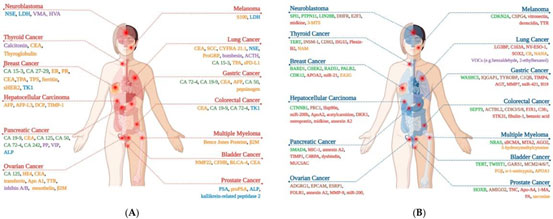
- Biomarkers used as established tumor markers and potential tumor markers under investigation. (A) Frequently used tumor markers. Color coding: orange, blue purple (hormone, , and green (carbohydrate antigen) (2025) (B) Novel tumor markers. Color coding: green (genetic alterations), brown (tissue), red (blood), orange (urine), and purple (breath)
- Some of the important Bio markers and their normal values are:
| PROTEIN TUMOR MARKER | TYPICAL CONCENTRATION IN HEALTHY POPULATIONS | TYPICAL CONCENTRATION IN CANCER PATIENTS | |
| Alpha-Fetoprotein (AFP) | <10 ng/mL | Elevated levels (>200–400 ng/mL) in hepatocellular carcinoma (HCC) and other cancers | |
| Carcinoembryonic Antigen (CEA) | <3 ng/mL | Elevated levels in various cancers, including colorectal, lung, and pancreatic cancer | |
| Prostate-Specific Antigen (PSA) | <4 ng/mL | Elevated levels in prostate cancer | |
| CA-125 | <35 U/mL | Elevated levels in ovarian and other gynecological cancers | |
| CA 19-9 | <37 U/mL | Elevated levels in pancreatic and other gastrointestinal cancers | |
| CA 15-3 | <30 U/mL | Elevated levels in breast cancer | |
| CA 27.29 | <40 U/mL | Elevated levels in breast cancer | |
| Human Chorionic Gonadotropin (hCG) | <5 IU/L | Elevated levels in germ cell tumors, including testicular and ovarian cancer | |
| Human Epidermal Growth Factor Receptor 2 (HER2) | Negative (score 0 or 1+ by immunohistochemistry) | Overexpression or amplification in HER2-positive breast and gastric cancer | |
- These markers can also be used as a part of routine screening for cancer diagnosis.
Dr. Mounika Reddy C
MBBS, MD (Radiation Oncology), DM (Medical Oncology)
Consultant – Medical Oncologist