


10+
Years of Experience
LANGUAGES SPOKEN
- Kannada
- English
- Hindi

No big cuts. No long stay. No major pain.
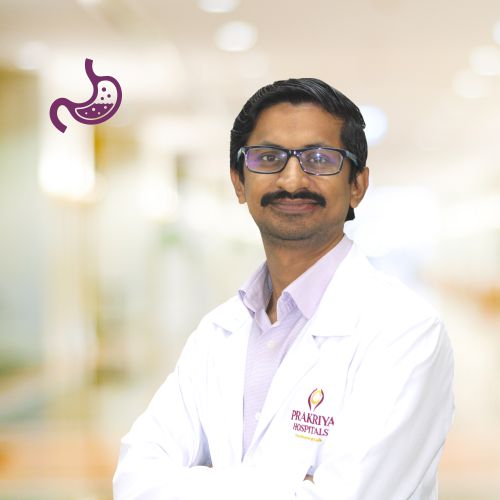
Consultant - Surgical Gastroenterologist, GI & HPB Oncosurgery, Bariatric and Robotic Surgeon

Consultant - Surgical Oncologist and Robotic Surgeon

Consultant - Obstetrics, Gynaecology, Laparoscopic & Robotic Surgeon

Consultant - General Surgery & Robotic Surgery

Consultant - Pediatric Surgery & Robotic Surgery

Excellent service by Nursing staff, Dr. Santhosh, Dr. Nataraj and Dr. Rajeev was very excellent in their treatment, thanks all
5.0
Dr Uday , Dr santhosh, Dr Anand gastro team is excellent, I had under surgery now I am feeling better, recovering, all ward staffs and opd staffs are very cooperative. Prakriya very good hospital.
5.0
Prakriya hospital all service is good, All staff r very cooperative. Consulted Dr Santosh gastro.well experience.
5.0
Dr. Santhosh and team had given good responsibility to the patient. Warden are treated good
5.0
Prakriya hospital providing a best treatment Dr. Santhosh and all other hospital staffs are very skillfull and caring.
5.0
I visited the hospital for my mother in law's gallbladder stone surgery. The procedure was done by Dr. Santhosh sir. There is no words to explain his patience and dedication towards his profession. Sir explained everything about the procedure. Though it was emergency, everything went well.. I am very thankful to Dr. Santhosh sir. I highly recommend Dr. Sathosh sir.
5.0
Robotic surgery is a minimally invasive surgical technique where the surgeon uses a computer-controlled robotic system to perform precise and controlled movements. The robot does not operate on its own—the surgeon controls every action through a console.
Compared to traditional open surgery, robotic surgery requires smaller incisions, offers higher precision, and provides enhanced vision through 3D magnification. It generally leads to faster recovery and reduced pain for patients.
Yes. Robotic surgery is considered very safe when performed by trained and certified surgeons. The technology offers higher accuracy, better visualization, and more control, reducing the chances of complications.
No. The robot never acts independently. The surgeon controls the robotic arms at all times using a specialized console.
Robotic surgery typically results in less pain than open surgery due to smaller incisions. Most patients experience mild to moderate discomfort, which is manageable with medication.
Recovery time varies by procedure but is generally faster than open surgery. Many patients return to normal activities within 1–2 weeks, depending on the complexity of the surgery.
Robotic surgery may cost more due to advanced equipment and technology. However, shorter hospital stays, reduced complications, and faster recovery often balance the overall expenses.
Eligibility depends on the patient’s health condition, type of procedure, and surgeon’s recommendation. Not all patients or surgeries are suitable for robotic techniques.
Like any surgery, risks may include bleeding, infection, or anesthesia-related issues. However, robotic precision often reduces the chances of major complications.
Your surgeon will guide you regarding medical tests, medications, fasting requirements, and other preparation steps before the procedure.